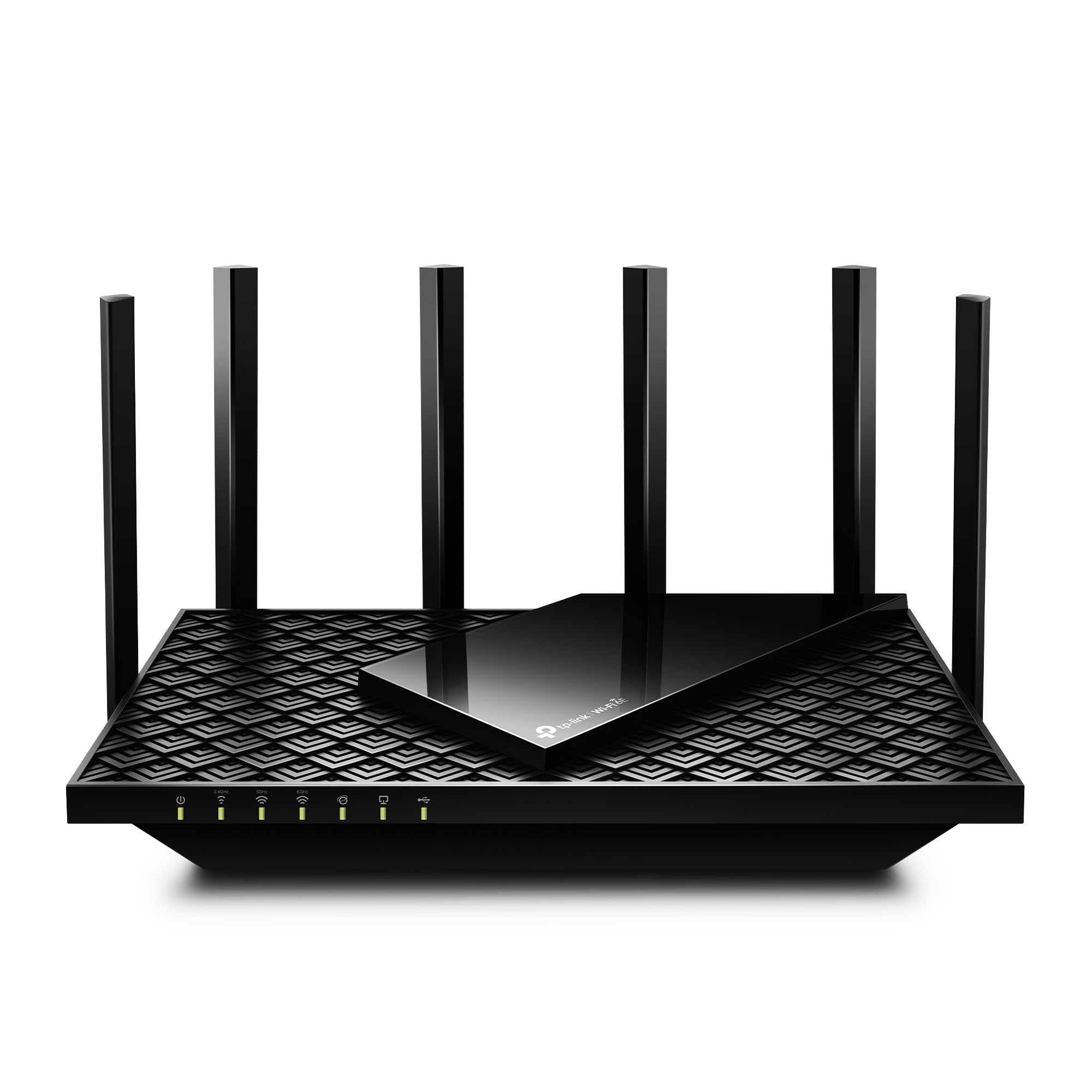
This TP-Link AXE5400 review looks at the Archer AXE75 for homes seeking tri-band Wi-Fi 6E, with a 6 GHz band and bandwidth for compatible Wi-Fi 6E devices.
Archer AXE75 Review Summary
The quick verdict
5,000+ ratings
Read Amazon ReviewsTP-Link Archer AXE75
A tri-band Wi-Fi 6E router for households seeking a dedicated 6 GHz band, mesh expansion, VPN options, and network controls.
- Tri-band Wi-Fi 6E with a combined maximum rate of up to 5400 Mbps: 2402 Mbps on 6 GHz, 2402 Mbps on 5 GHz, and 574 Mbps on 2.4 GHz.
- The 6 GHz band is intended to provide additional bandwidth and support more responsive gaming and video chatting.
- OFDMA works with the tri-band design to support simultaneous transmission to more devices.
- A 1.0 GHz dual-core CPU and 512 MB high-speed memory handle router processing.

Pros
- Tri-band Wi-Fi 6E provides a 6 GHz band with more bandwidth and faster speeds.
- OFDMA and tri-band operation target simultaneous use by more devices.
Consider before buying
- Most internet provider setups require a separate modem, adding another device and connection to plan for.
- The 6 GHz band is most relevant when household devices can use Wi-Fi 6E; buyers with older equipment may not benefit from that band.
Read the full review summary
The Archer AXE75 combines three Wi-Fi bands, a stated maximum combined Wi-Fi rate of 5400 Mbps, and a 6 GHz band.
That gives buyers a way to add newer Wi-Fi 6E devices to a home network while retaining 5 GHz and 2.4 GHz access for other devices.
It suits buyers who value device capacity, VPN server and client options, or the ability to extend coverage through a compatible OneMesh extender. It is a router, so most internet providers still require a separate modem.
The buying factors
Archer AXE75 Scorecard
Editorial scores reflect listed features and buyer fit; they are not laboratory measurements or customer ratings.
Wi-Fi band flexibility
Tri-band Wi-Fi 6E with a 6 GHz band brings more bandwidth and faster speeds for homes seeking added capacity and speed.
Combined Wi-Fi capacity
The maximum combined rate reaches 5400 Mbps across the three bands, with 2402 Mbps assigned to both 6 GHz and 5 GHz.
Multi-device support
Tri-band operation and OFDMA are designed to raise capacity for simultaneous device transmissions, a useful match for connected households.
Mesh expansion
OneMesh support provides an extension path when paired with a TP-Link OneMesh extender.
Network controls
VPN server and client support, basic parental controls, security scanning, and quality of service add useful management options.
Setup flexibility
Provider compatibility is broad, but most setups need a separate modem, so buyers should account for that equipment.
Key Features and Specifications of Archer AXE75
- Tri-band Wi-Fi 6E with a combined maximum rate of up to 5400 Mbps: 2402 Mbps on 6 GHz, 2402 Mbps on 5 GHz, and 574 Mbps on 2.4 GHz.
- The 6 GHz band is intended to provide additional bandwidth and support more responsive gaming and video chatting.
- OFDMA works with the tri-band design to support simultaneous transmission to more devices.
- A 1.0 GHz dual-core CPU and 512 MB high-speed memory handle router processing.
- OneMesh can extend the network when paired with a TP-Link OneMesh extender.
- VPN server and client support includes OpenVPN, PPTP, and L2TP; HomeShield includes basic network security, parental controls, quality of service, and reports.
Pros and Cons of Archer AXE75
Pros
- Tri-band Wi-Fi 6E provides a 6 GHz band with more bandwidth and faster speeds.
- OFDMA and tri-band operation target simultaneous use by more devices.
- OneMesh support offers a compatible extender path for broader home coverage.
- VPN server and client options add flexibility for remote access and routing.
- HomeShield includes basic security, parental controls, QoS, and usage reports.
Consider before buying
- Most internet provider setups require a separate modem, adding another device and connection to plan for.
- The 6 GHz band is most relevant when household devices can use Wi-Fi 6E; buyers with older equipment may not benefit from that band.
- For buyers who depend on parental controls or security tools, check which HomeShield functions are included at no cost and which require a subscription.
Who Should Buy Archer AXE75?
Good fit
Choose the Archer AXE75 if your home has Wi-Fi 6E devices and you want a tri-band router with 6 GHz alongside the familiar 5 GHz and 2.4 GHz bands.
Its stated band rates make the feature mix easy to compare with your broadband plan and connected devices.
It also makes sense for a busy household that wants simultaneous device support, VPN configuration options, and basic network management features in one router. OneMesh gives buyers a route to expand coverage with a compatible TP-Link extender.
Who should skip it
Look elsewhere if your priority is a built-in modem: most providers require a separate modem with this router. Also consider whether your current devices can use 6 GHz before paying extra attention to the Wi-Fi 6E feature set.
Archer AXE75 Review: What the Tri-Band Design Means
The 6 GHz band has a specific role
The Archer AXE75’s defining feature is its 6 GHz band, which complements 5 GHz and 2.4 GHz rather than replacing them. Its appeal depends on having compatible Wi-Fi 6E devices and wanting another band for bandwidth-intensive activity.
Capacity is about sharing connections
OFDMA and three-band operation are aimed at handling transmissions from multiple devices at once.
That makes the router relevant to a connected household, although the listed maximum Wi-Fi rates do not guarantee the speed any particular device will receive.
Mesh and network management
OneMesh provides a way to add coverage through a compatible TP-Link extender. VPN server and client support, together with HomeShield basics such as security scans, parental controls, and QoS, gives owners several network-management options to consider.
Plan for the modem
The AXE75 works with a wide range of providers, but most provider connections require a separate modem. Buyers replacing a gateway should confirm which existing equipment they can keep before choosing this router.
Alternatives to Archer AXE75
Computer Routers alternative
1,000+ ratings
Read Amazon ReviewsTP-Link Archer BE230
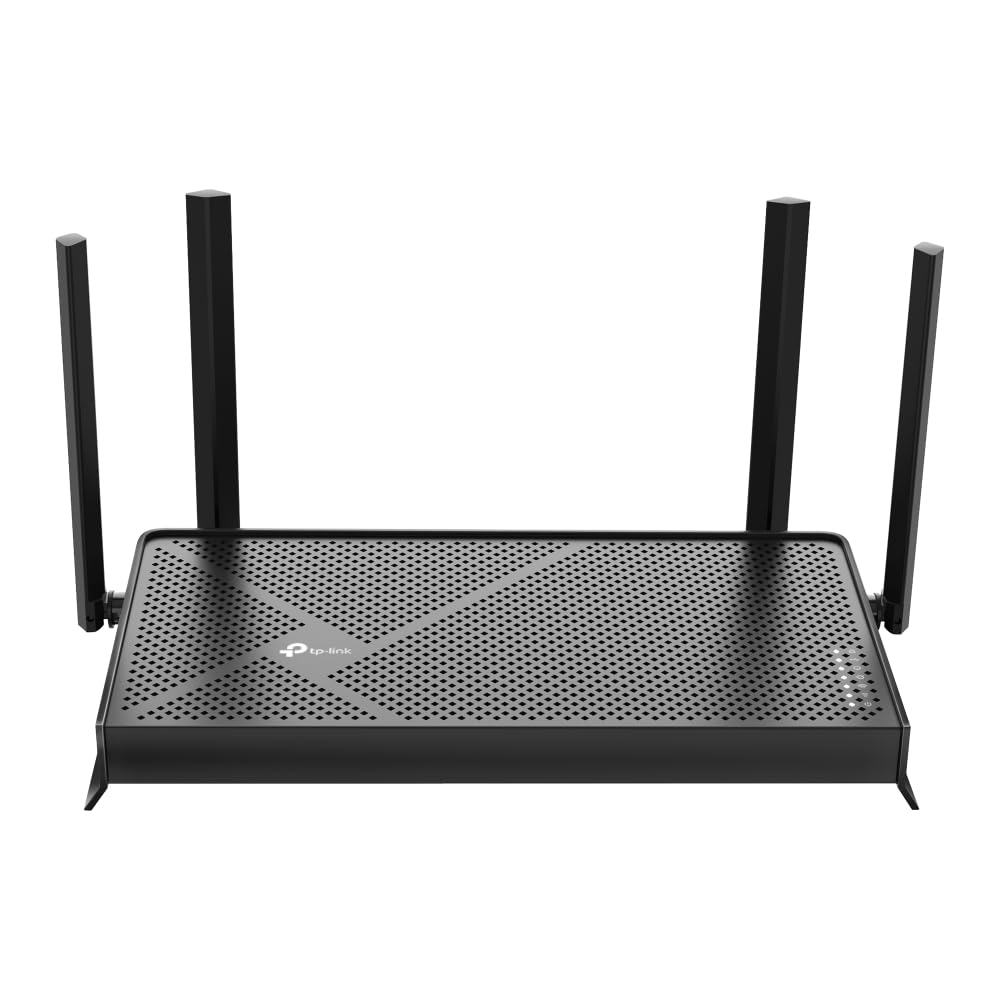
Choose the BE230 if Wi-Fi 7 features and 2.5G ports suit your network; choose the AXE75 if you prefer tri-band Wi-Fi 6E and its 6 GHz band.
- The Archer BE230 is a dual-band Wi-Fi 7 router with two 2.5G ports, but dual-band routers do not support 6 GHz.
- The Archer AXE75 uses a tri-band Wi-Fi 6E design with a 6 GHz band and a combined maximum rate of up to 5400 Mbps.
Computer Routers alternative
500+ ratings
Read Amazon ReviewsTenda RX12 Pro V3.0
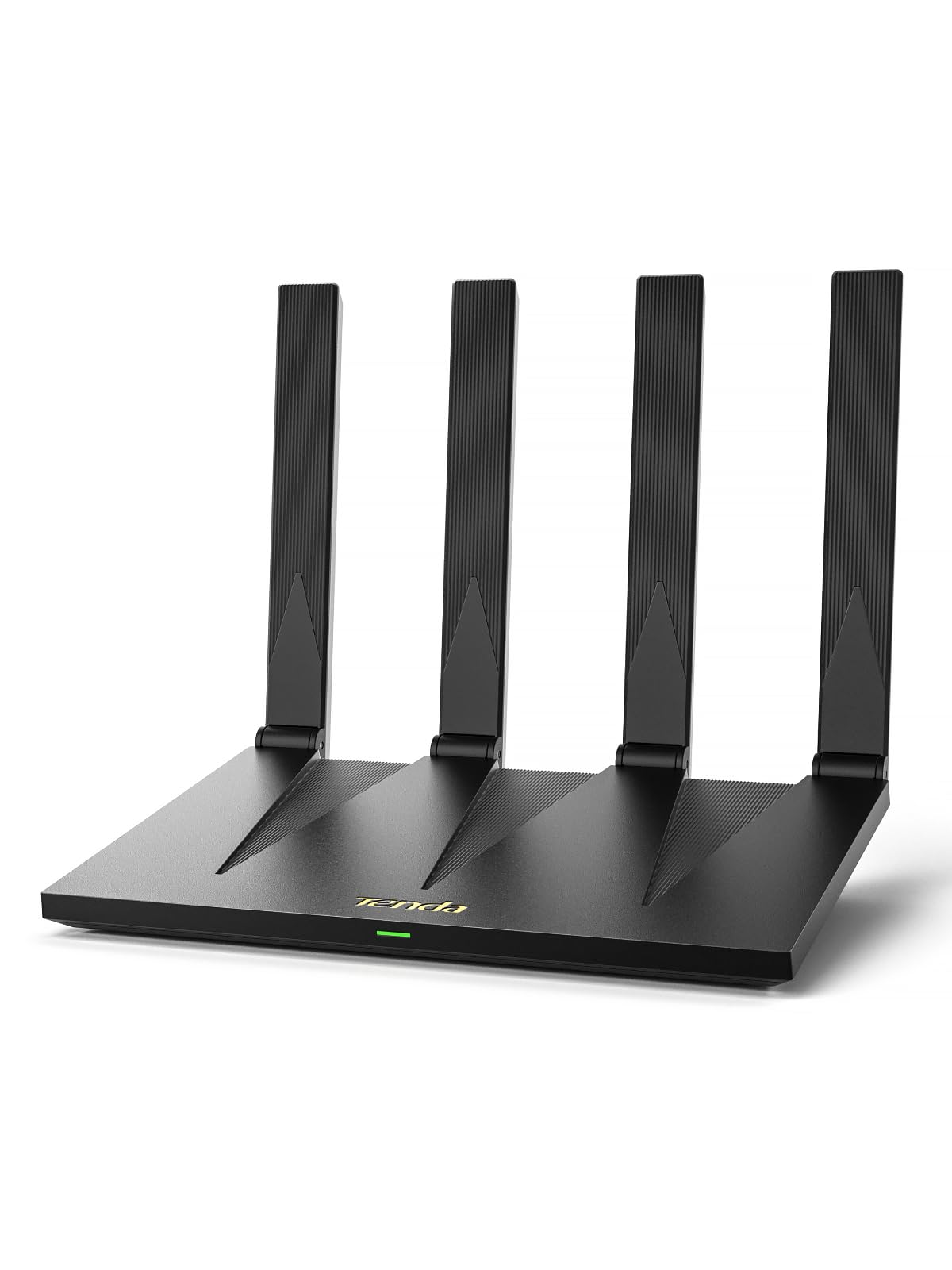
Consider the Tenda if dual-band Wi-Fi 6 and four Gigabit ports suit your needs; choose the AXE75 if you prefer tri-band Wi-Fi 6E with a 6 GHz band.
- The Tenda RX12 Pro is a dual-band Wi-Fi 6 router with up to 2402 Mbps on 5 GHz, up to 574 Mbps on 2.4 GHz, and four full Gigabit ports.
- The AXE75 pairs tri-band Wi-Fi 6E with a 6 GHz band and up to 5400 Mbps combined Wi-Fi rates.
Is Archer AXE75 Worth It?
The TP-Link Archer AXE75 is worth considering if you want tri-band Wi-Fi 6E, a 6 GHz band for compatible devices, and flexible network management.
Its OFDMA support and OneMesh expansion option also address the needs of connected households that may want to extend coverage.
Before buying, account for the separate modem most provider setups need and whether your devices can use Wi-Fi 6E.
If those conditions fit, the Archer AXE75 combines tri-band Wi-Fi 6E, OneMesh expansion with a TP-Link OneMesh Extender, and VPN Server and Client support.
Your review at a glance
5,000+ ratings
Read Amazon ReviewsTP-Link Archer AXE75
A tri-band Wi-Fi 6E router for households seeking a dedicated 6 GHz band, mesh expansion, VPN options, and network controls.
- Tri-band Wi-Fi 6E with a combined maximum rate of up to 5400 Mbps: 2402 Mbps on 6 GHz, 2402 Mbps on 5 GHz, and 574 Mbps on 2.4 GHz.
- The 6 GHz band is intended to provide additional bandwidth and support more responsive gaming and video chatting.
- OFDMA works with the tri-band design to support simultaneous transmission to more devices.
- A 1.0 GHz dual-core CPU and 512 MB high-speed memory handle router processing.